What does the textile touch?
Name the garment layer, seat surface, barrier, panel or upholstery zone and the relevant movement, exposure and care.
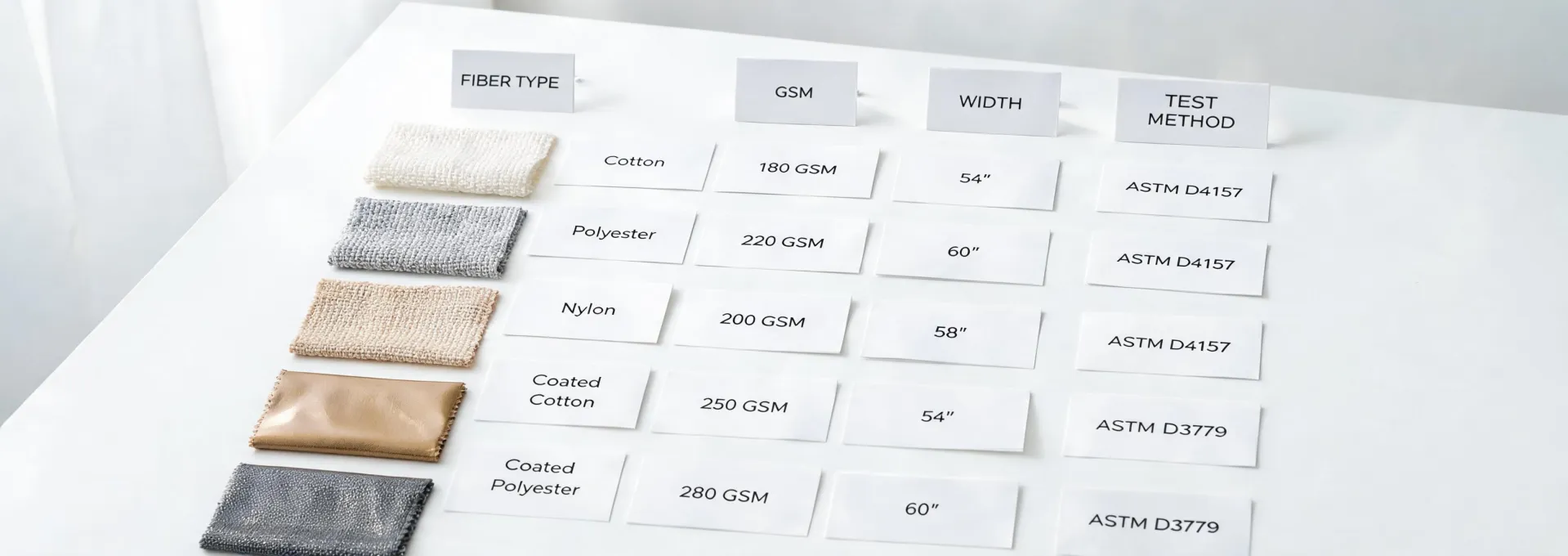
Guided shortlist
Filter by application, handfeel, weight, construction, performance evidence and budget before color preference becomes the entire brief.
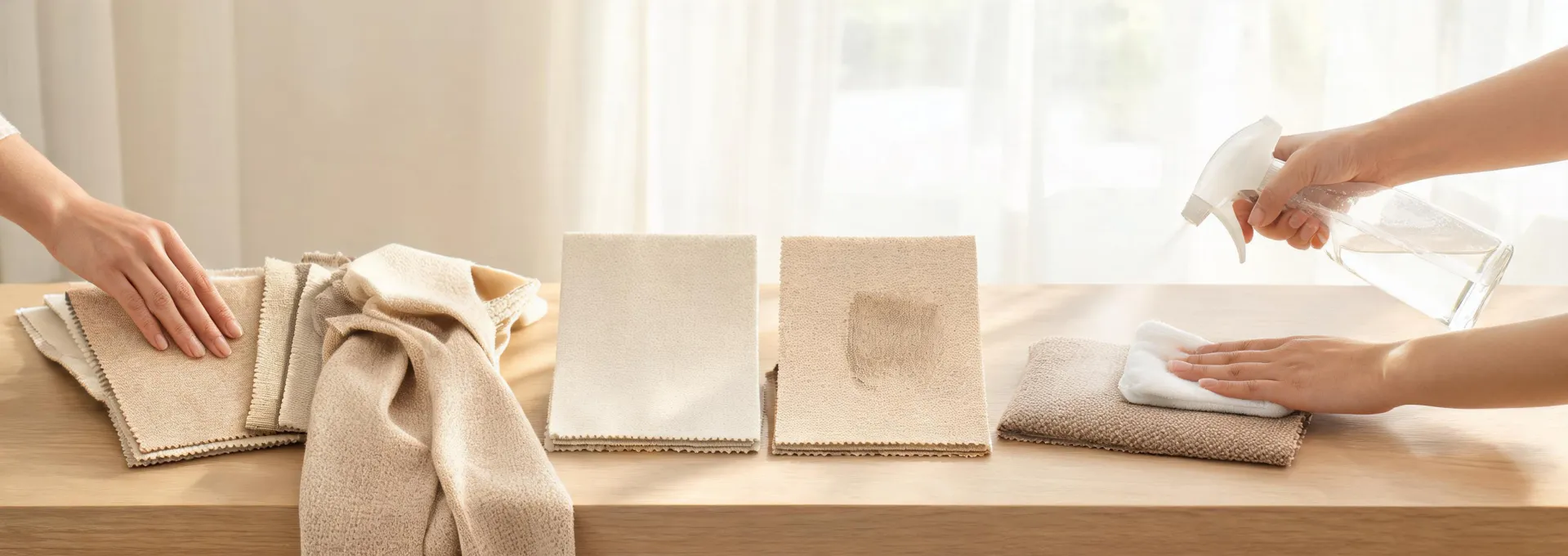
Tactile and practical
A pleasant surface still needs a suitable construction, usable width, sample stage and maintenance path.
Selection matrix
Name the garment layer, seat surface, barrier, panel or upholstery zone and the relevant movement, exposure and care.
Compare softness, structure, drape, pile direction and friction on the actual construction rather than a screen image.
Record target GSM, tolerance, usable width, roll format and any directional repeat that changes yield.
Select the named abrasion, tensile, tear, colorfastness, dimensional or flame method that fits the application.
State sample quantity, MOQ boundary, target price basis, approval date, destination and incoterm.
Natural fibers can support tactile and moisture-management goals, while batch variation and care demands may require wider review. Confirm composition, dimensional behavior, shade tolerance and maintenance on the selected construction.
Synthetic fibers can support strength, dimensional control and finishing options, while chemistry, heat response and microfiber considerations remain part of the decision. Neither route is universally superior.
Coating can tune barrier and surface behavior, but flex durability, handfeel and long-term response depend on formulation, coating weight and substrate.
Lamination can provide a defined functional layer, while complexity, stiffness, repair and recycling pressure may increase. Test the complete supplied stack.
Before approval
Sample stages should close named decisions rather than accumulate unlabeled swatches.
Send the application, tactile direction, weight and width range, named methods, sample quantity, budget basis and target date.